A stitch in time can save our planet.
Five steps
- 1Cut and photograph your cloth squares.
- 2Pick a pattern.
- 3Print the sheet and lay the squares on it.
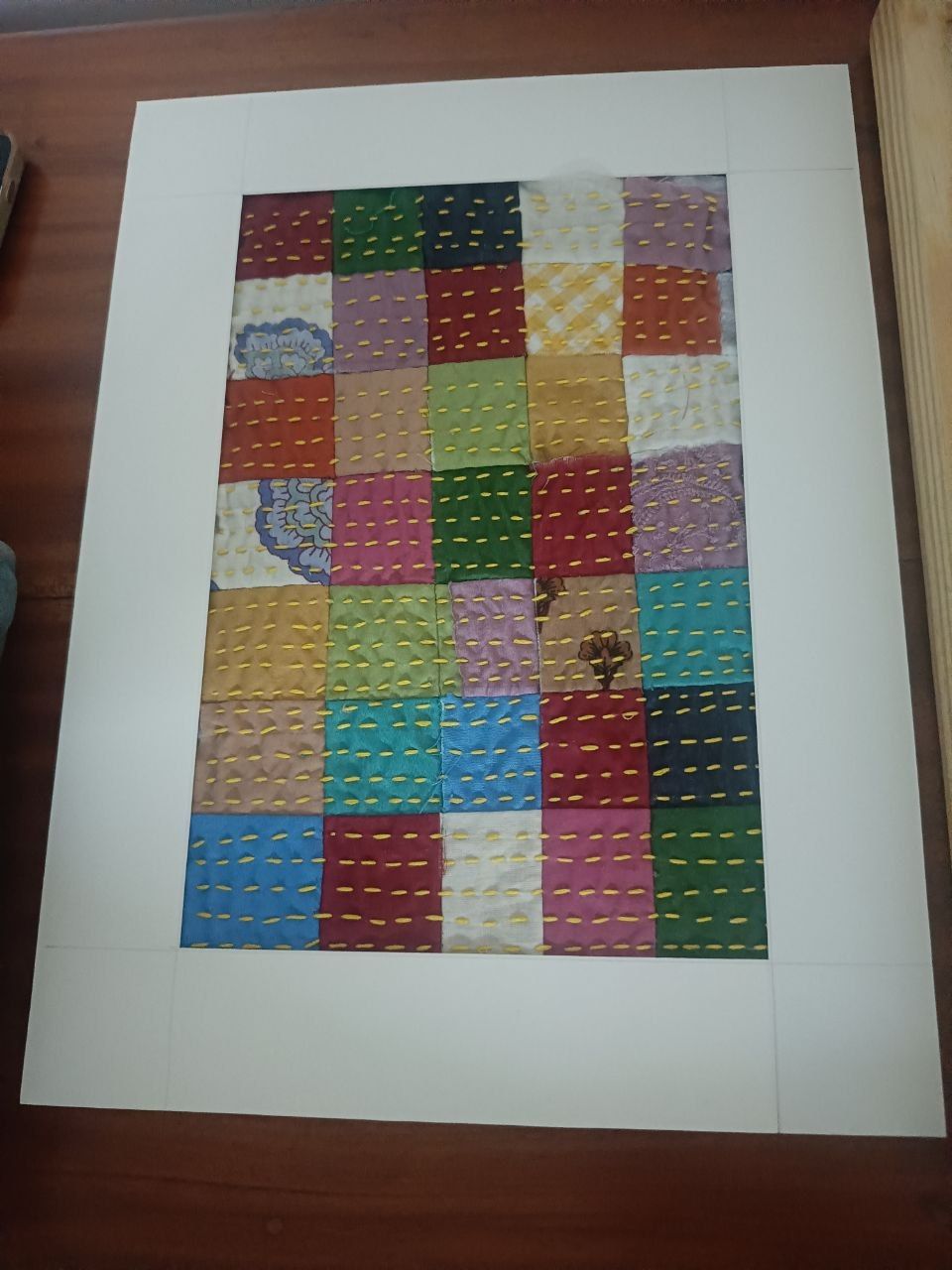
- 4Stitch the rows.
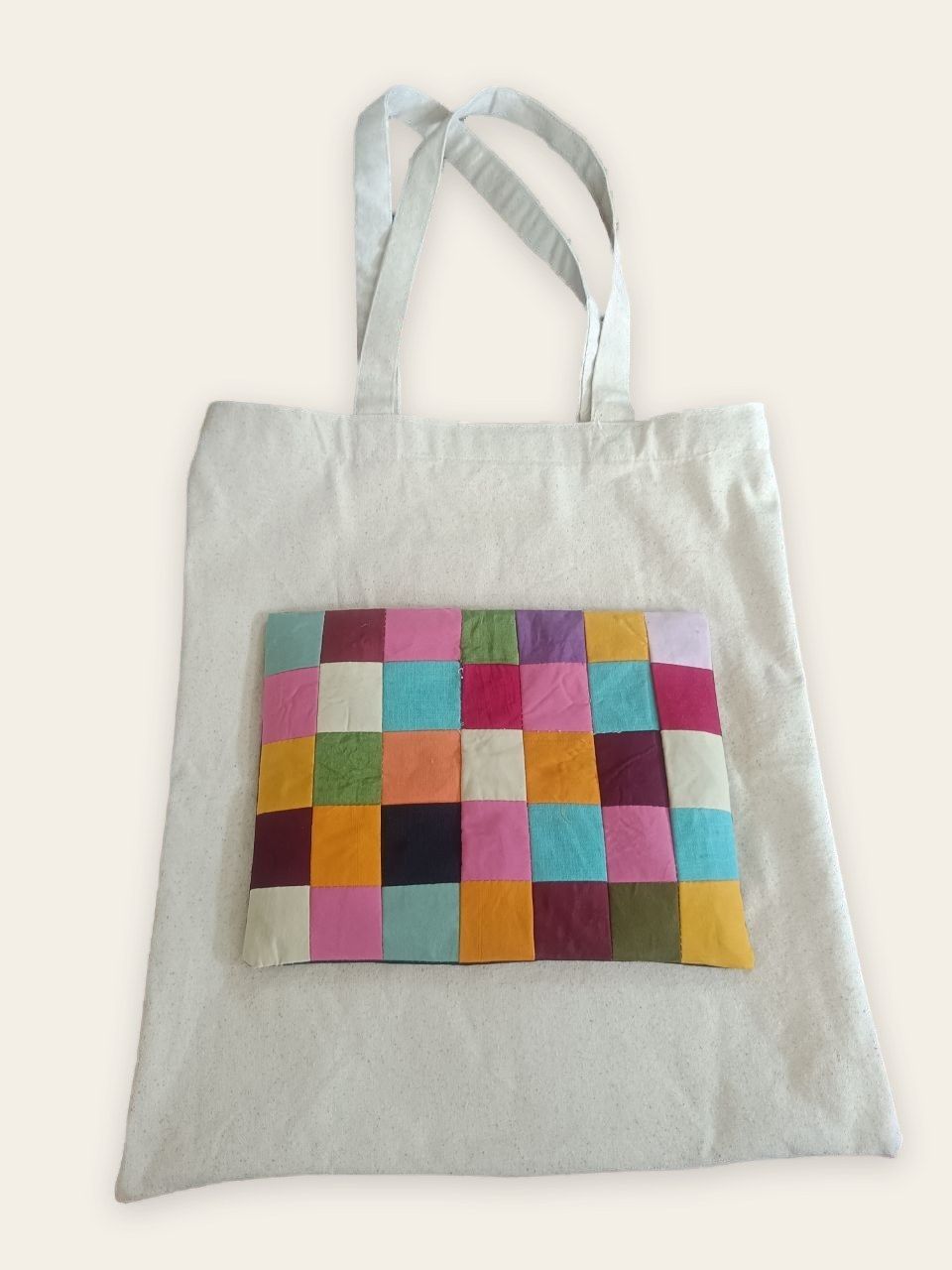
- 5Frame it or sew it on a bag.
Free. No sign-in. No AI. Photos stay on the device.
The team behind Kantha
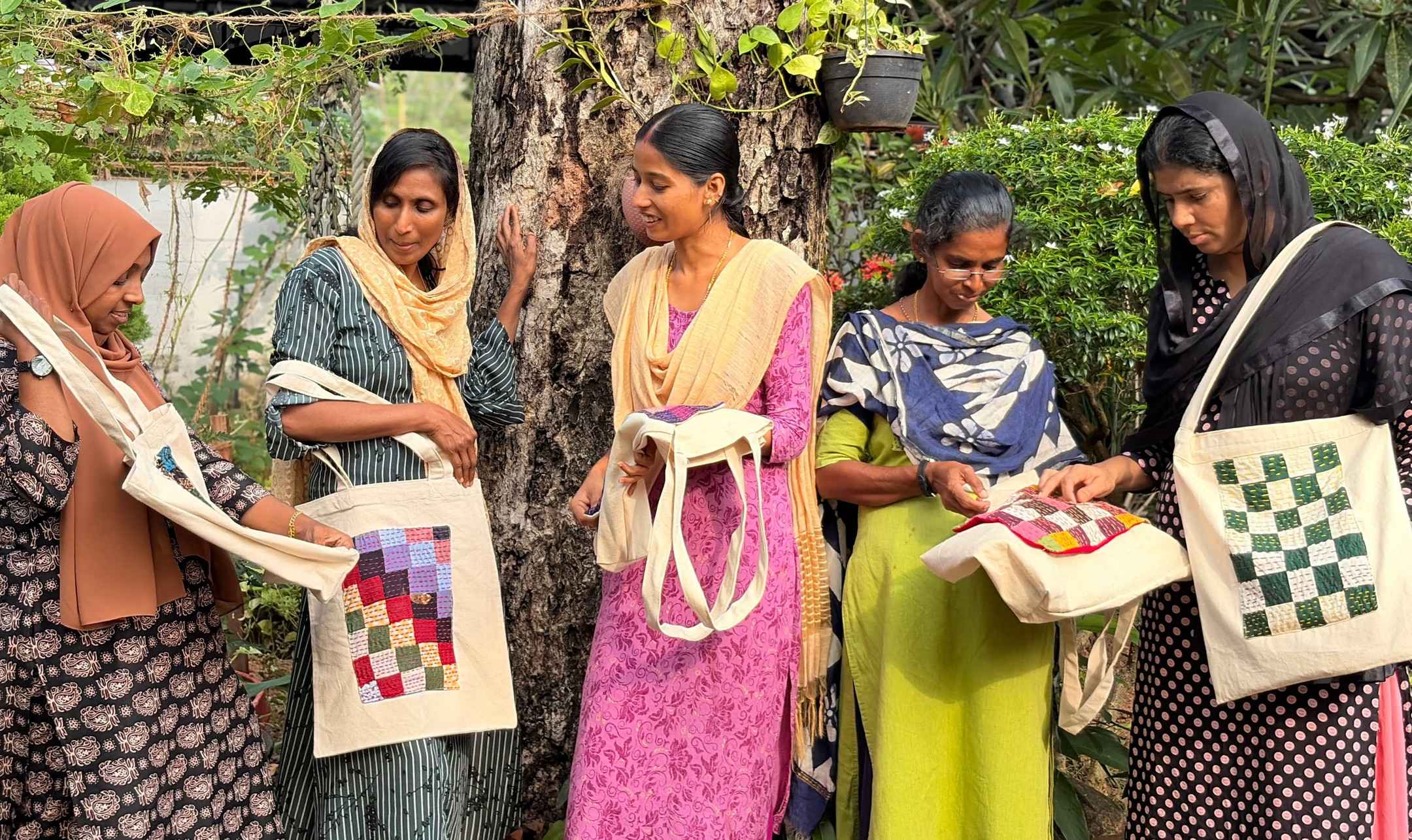
From scraps to a panel
Scraps in a box become a panel, which is a picture made of cloth squares.
- 1
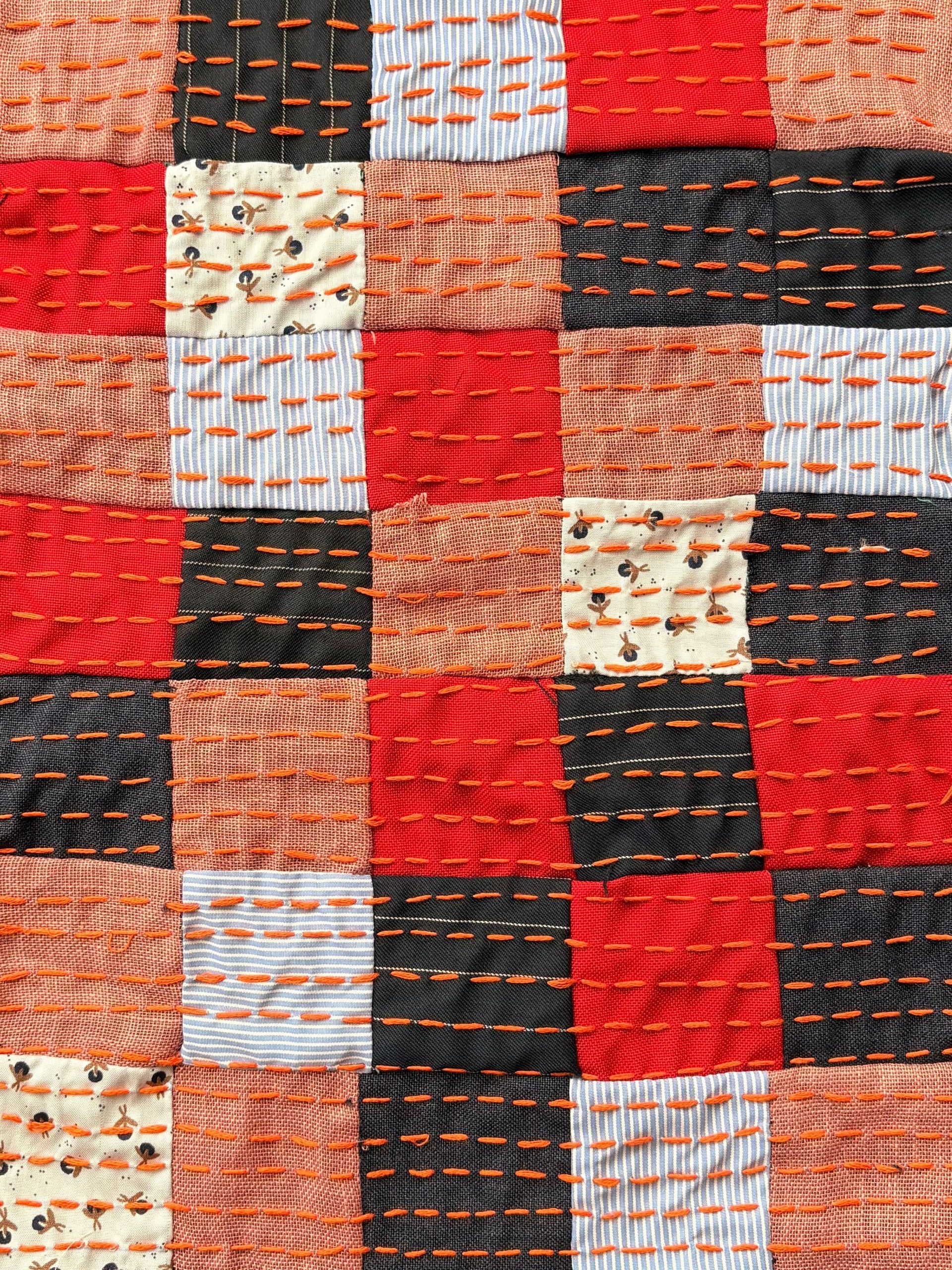
Cut and photograph your cloth squares
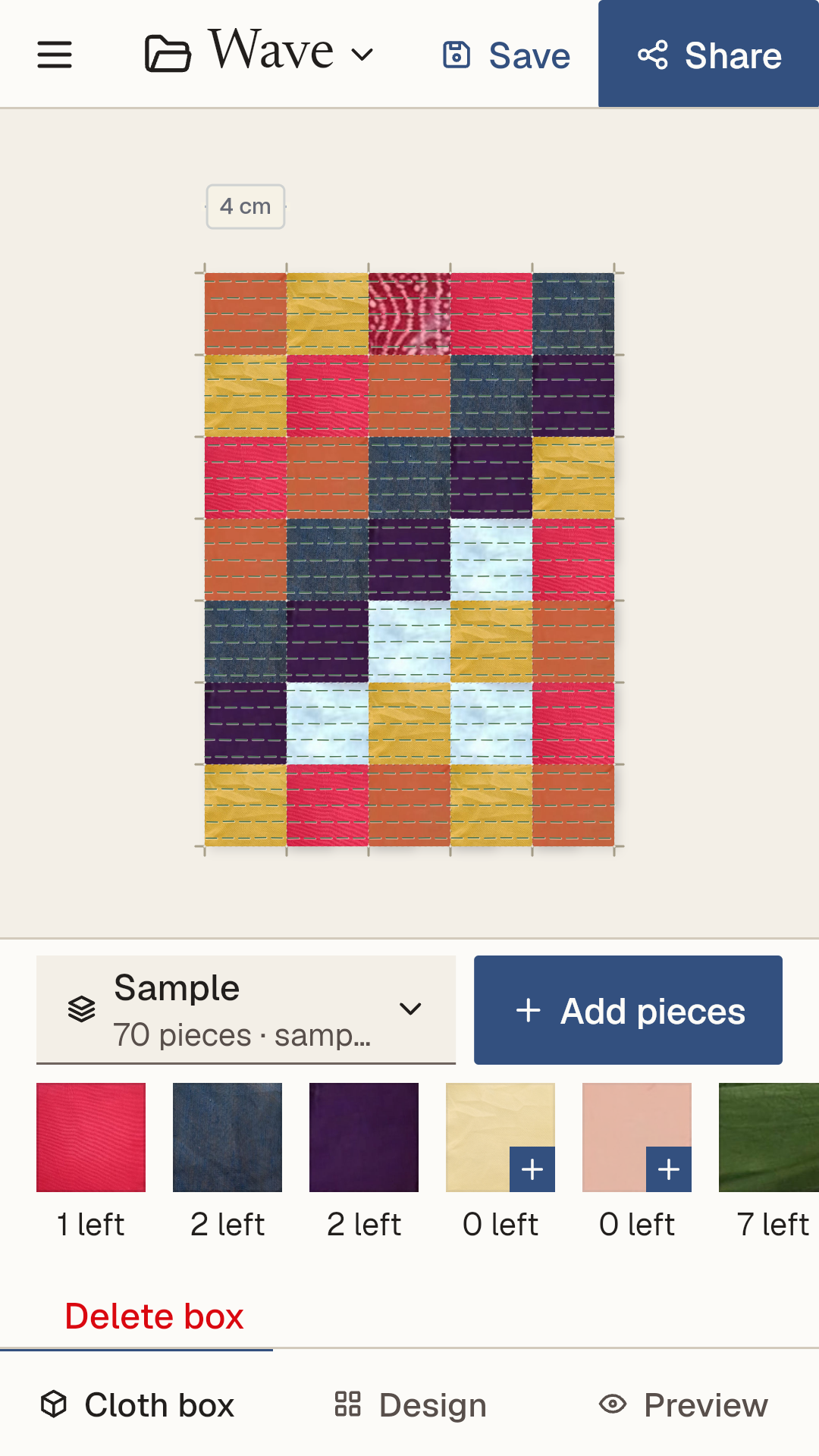
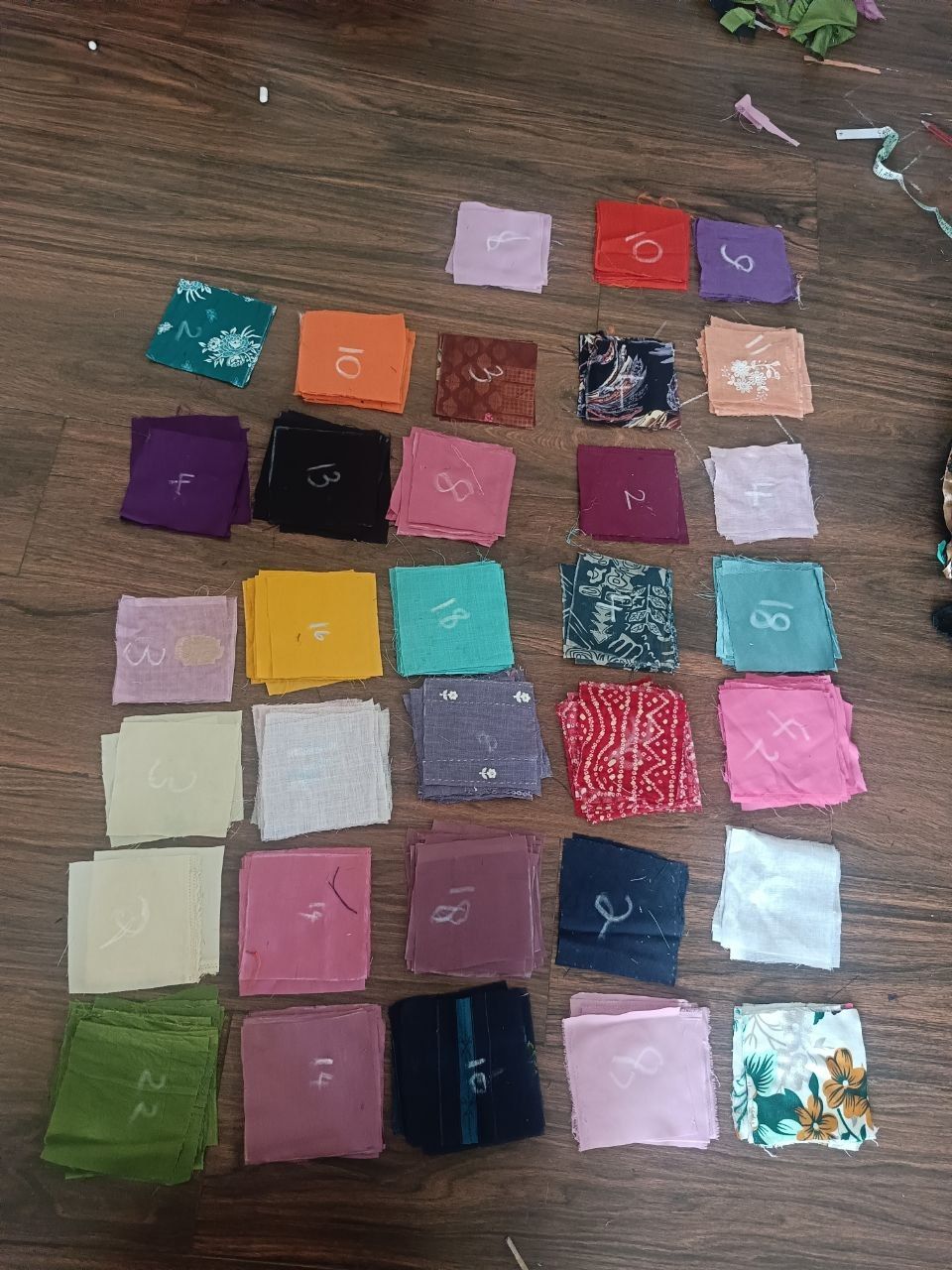
Cut cloth into 6 × 6 cm squares. Only 4 × 4 cm of each square shows, and the rest goes under the next square. Photograph each kind of cloth in daylight and say how many squares of it you have. Kantha measures the colour and keeps the cloth in a box on your phone or computer. A number under each cloth shows the squares that remain.
- 2
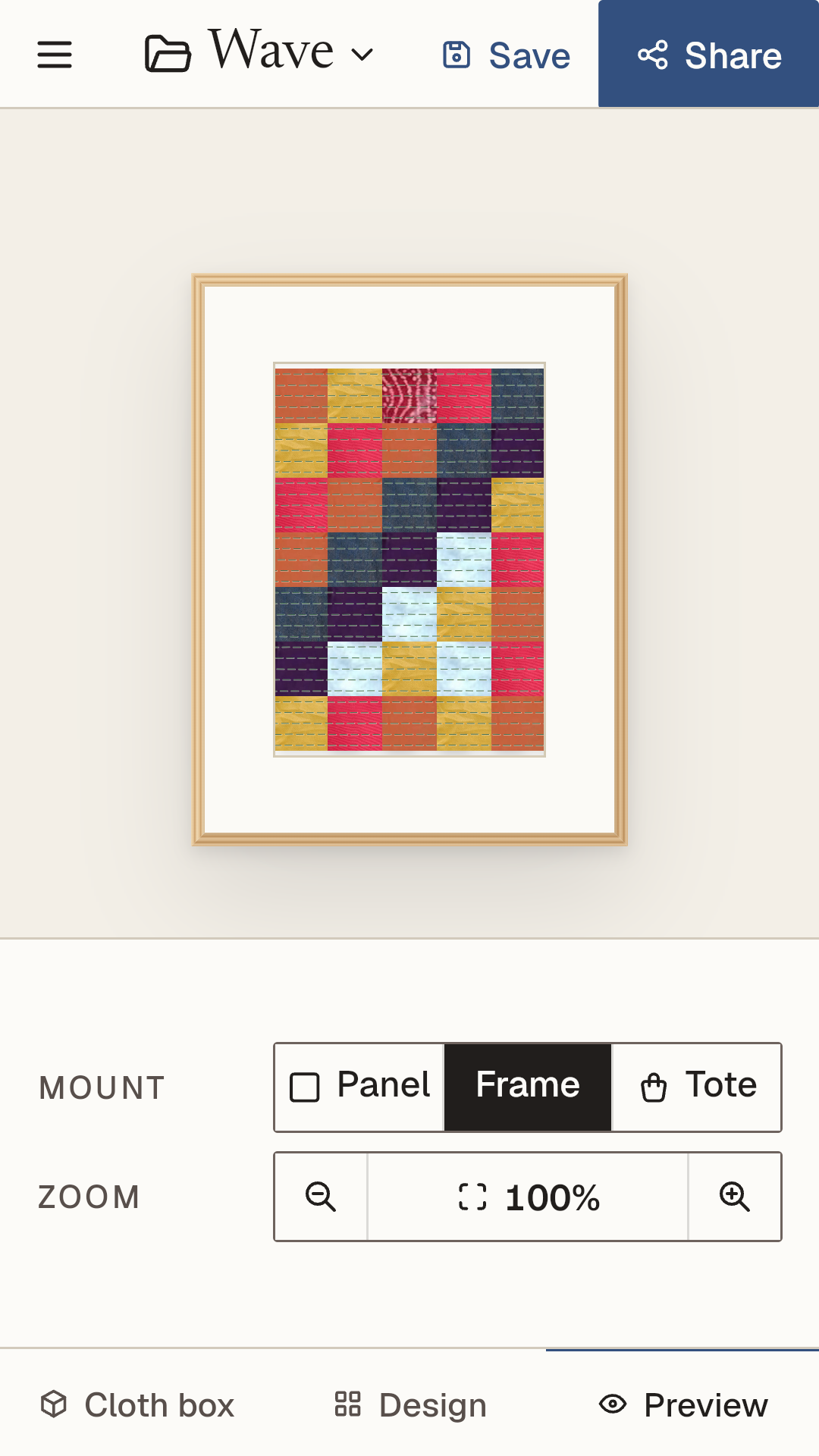
Pick a pattern
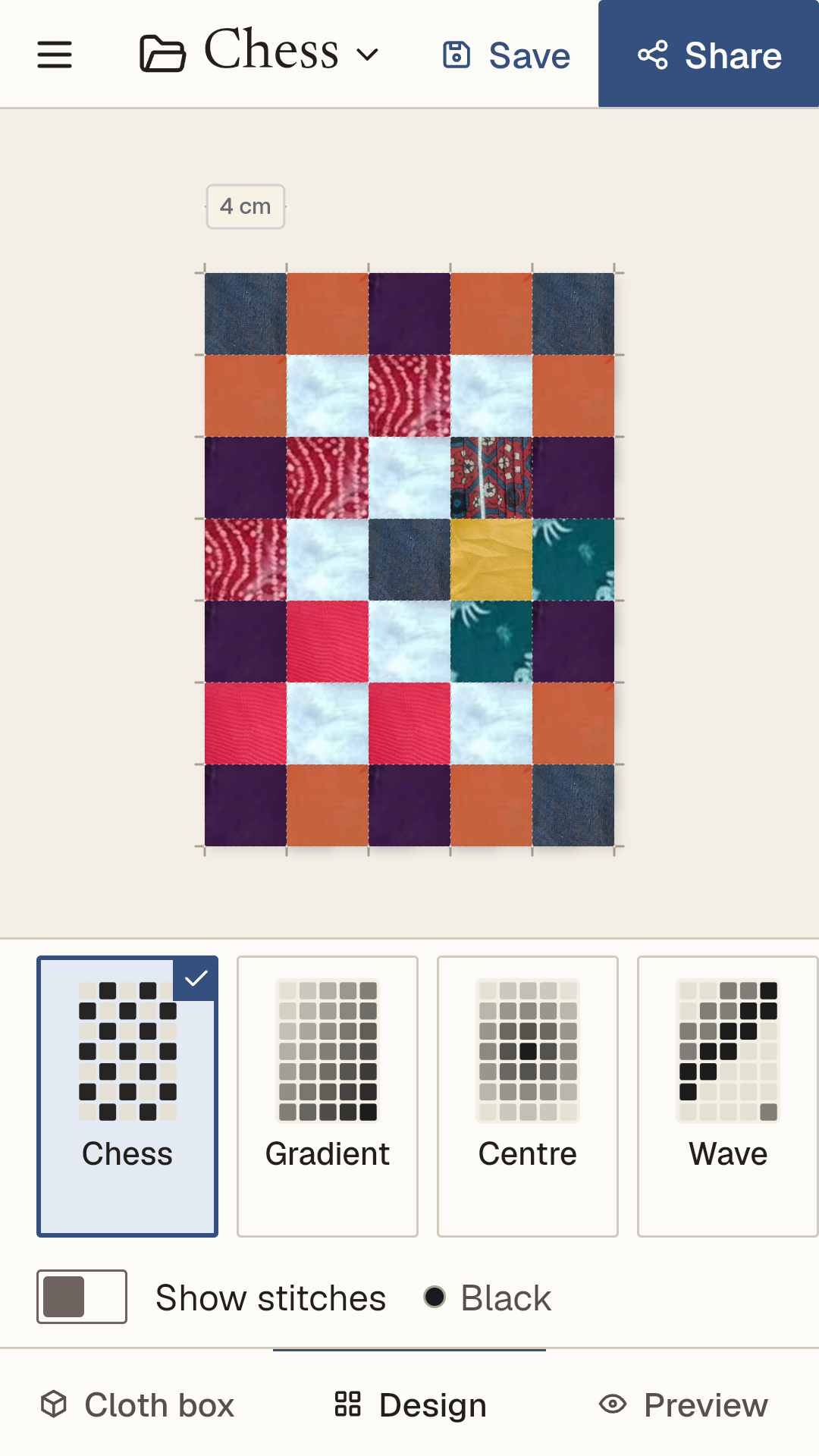
Choose one of 11 patterns. Kantha arranges your squares into a panel of 35 squares, 5 across and 7 down. Press the pattern again for a new arrangement.
- 3
Print the sheet and lay the squares on it
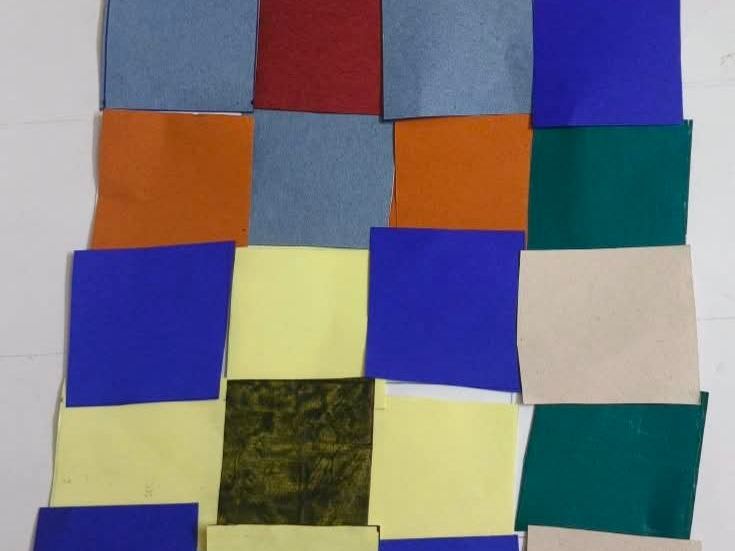
Press Share, then Print pattern PDF. Print it on A4 paper at 100%, also called actual size, so each square on the sheet is 4 cm. Lay a plain piece of cloth, a little bigger than the sheet, flat. Put the printed sheet on it. Then put each cloth square on its printed square, and the extra 2 cm goes under the next square. Along the outer edges, trim the squares at the printed line.
- 4
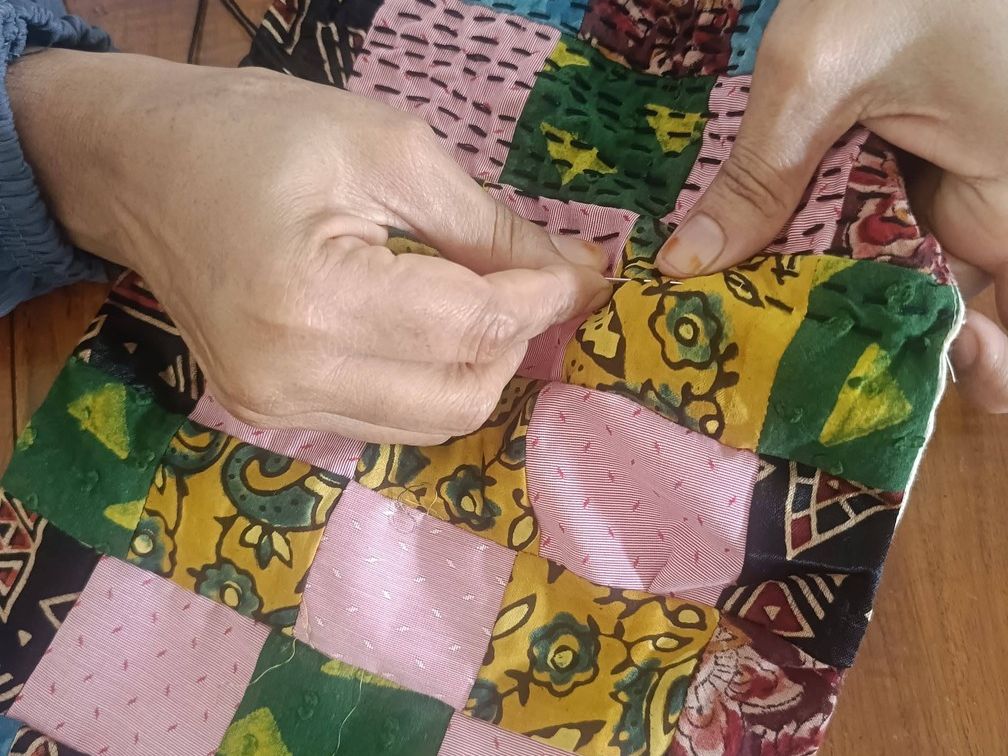
Stitch the rows
Sew rows of running stitch, which is the needle going in and out in a straight line. The stitches go through the squares, the paper and the plain cloth underneath, and the paper keeps every square in place. Tear the paper away when you have finished all the rows.
- 5
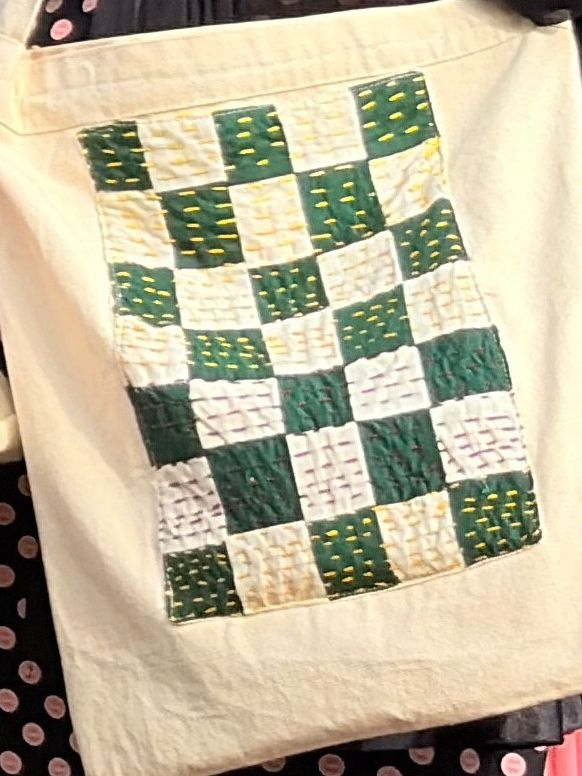
Frame it or sew it on a bag
Put the panel in a frame, or put it on a tote bag. The Preview tab shows both.
Who it's for
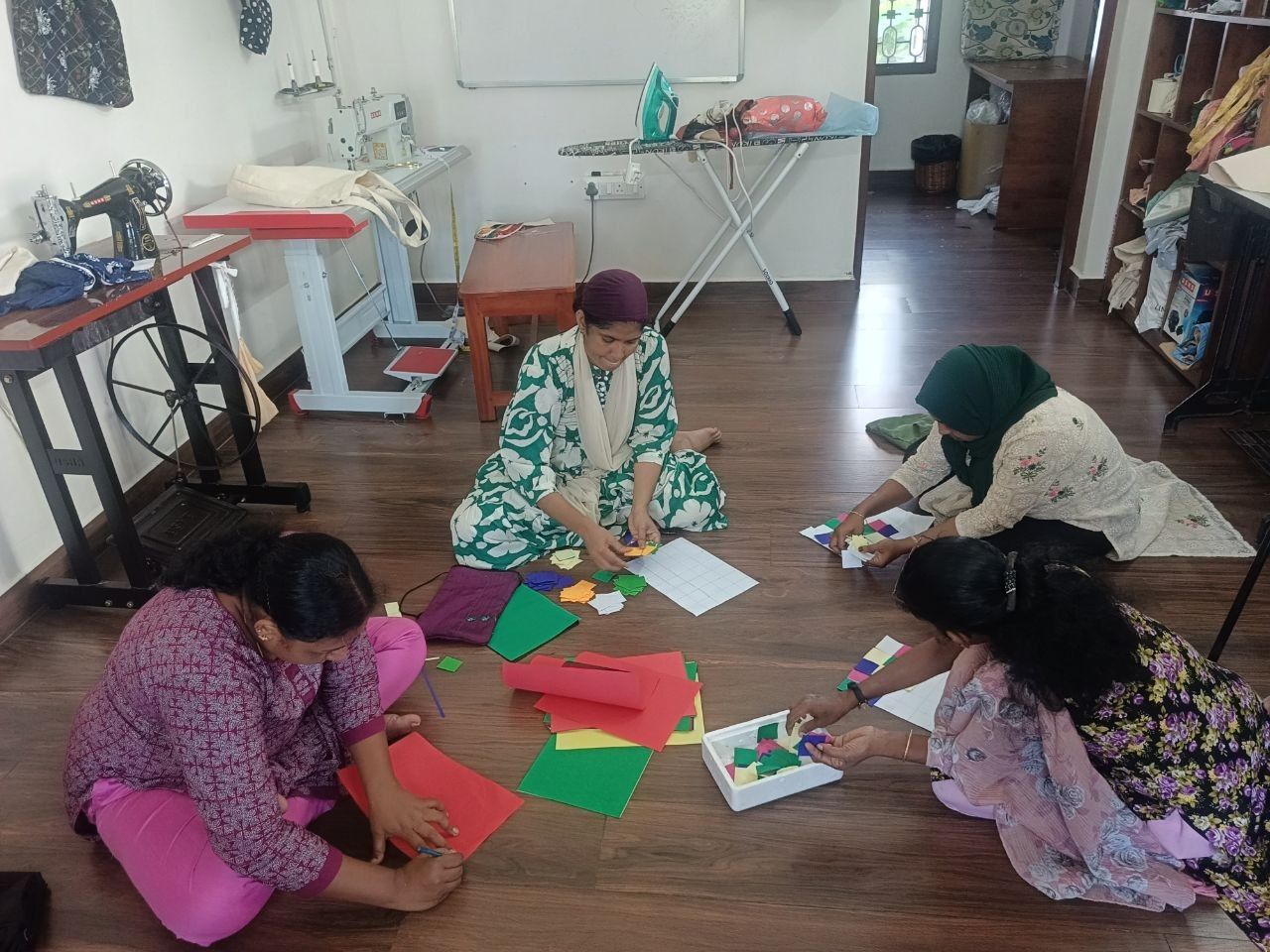
For NGOs and community groups
A free web studio for groups that meet to make things. Members bring cloth scraps, the studio plans a panel, and the group prints it and stitches it by hand.
For upcycling businesses
A small upcycling business can use the free Kantha studio to plan panels from offcuts, print a true-size sheet and repeat a design. It can then test a small batch.
For hobby stitchers
A free studio that arranges fabric scraps into a pattern, printed true to size for hand stitching. Everything a first project needs, and tips from a club.
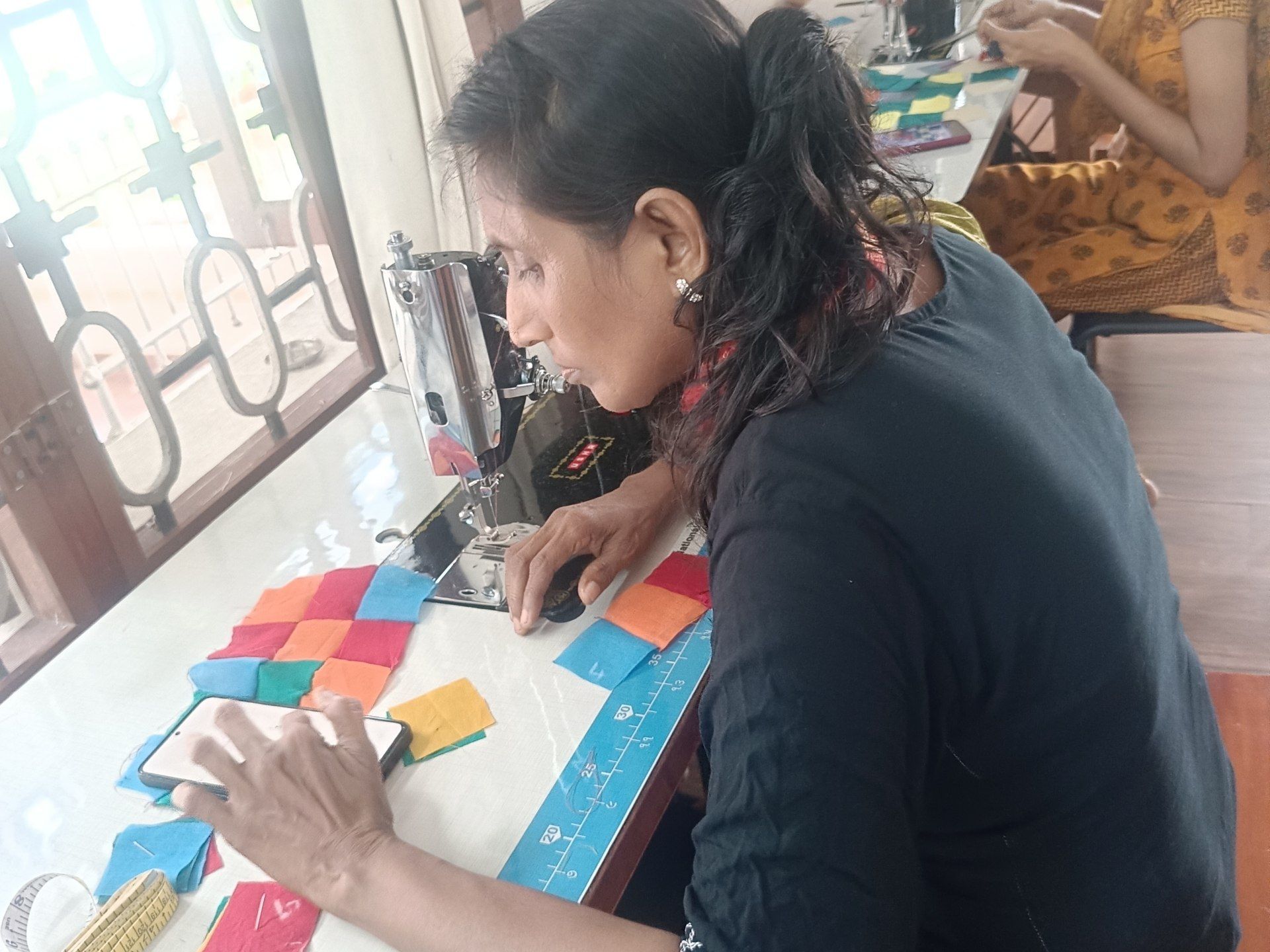
For tailors and boutiques
Tailors and boutiques can sort their offcuts so makers can use them in the free Kantha studio. It keeps good cloth out of the bin.
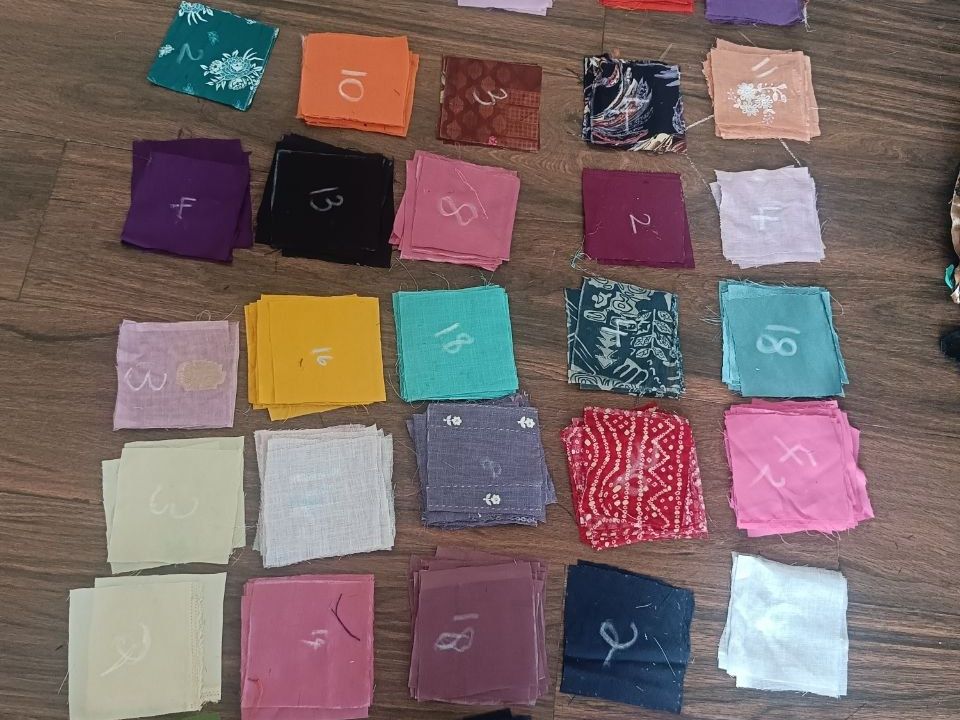
For schools
A free web studio for teachers. Pupils turn cloth scraps into a stitched panel and meet art, maths and reuse. No accounts, no ads, and photos stay on the device.
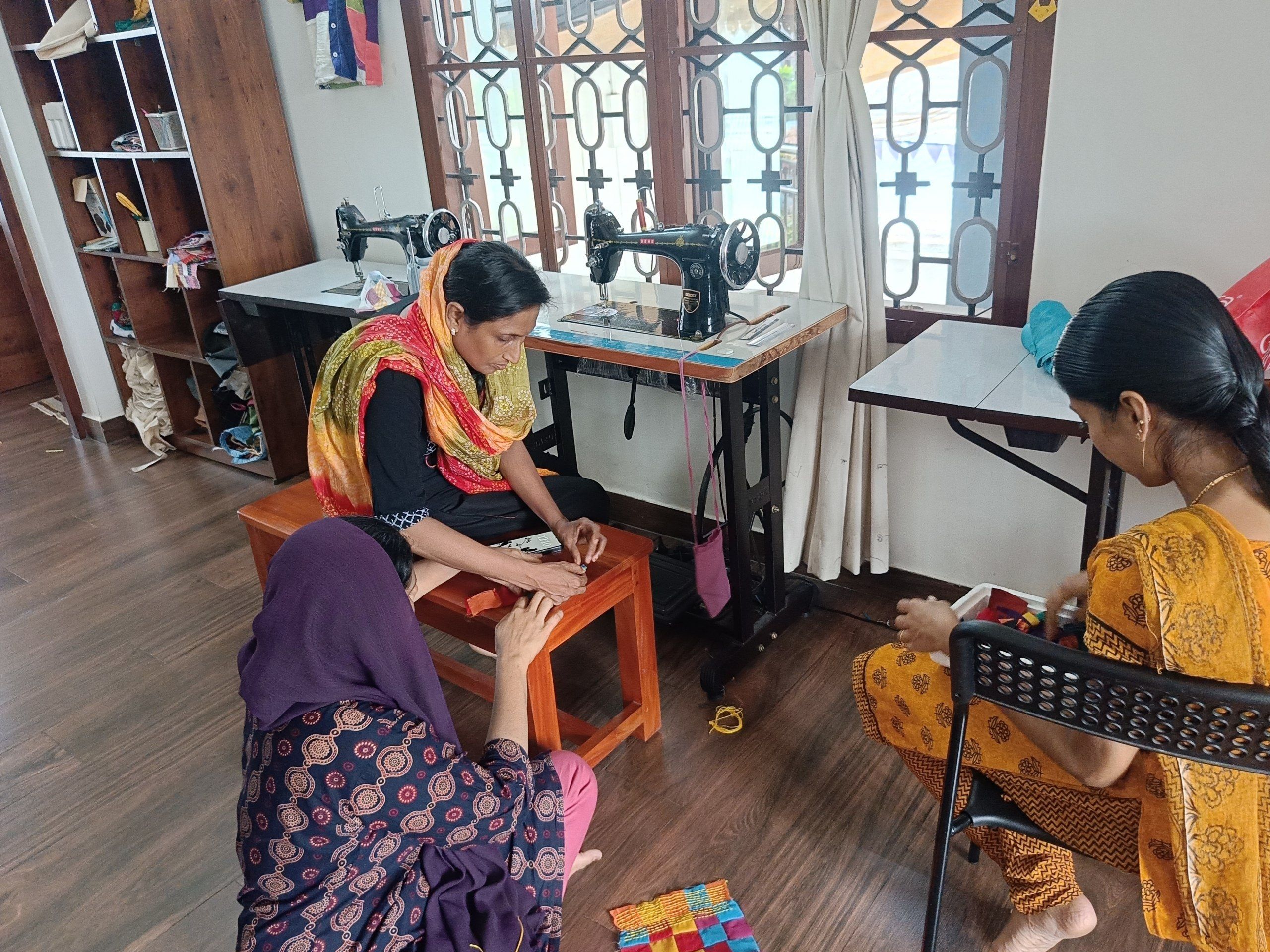
Case study
Case study: a stitching club in Fort Kochi
The Stitching Club at aikyam space is a community group in Fort Kochi, Kerala, India. Its makers turn tailors' offcuts into panels. They stitch each panel by hand and plan it in Kantha.
Read more: Case study: a stitching club in Fort KochiRead more: ManifestoA stitch in time can save our planet.
From the blog
Patterns
Bargello with squares, not strips: the Wave pattern
Bargello quilts use strips and a sewing machine. The Wave pattern gives a bargello-style layout from 35 squares of cloth, stitched by hand.
How-to
How to cut and photograph cloth squares
Cut 6 × 6 cm squares with a window template and scissors, then photograph them in daylight so the colour comes out true. Step by step.
Craft
What is a kantha quilt, and how do makers make one?
A kantha quilt is old cloth layered and held with rows of running stitch. What makers make it from, how they stitch it and what they use it for.
Questions
Is Kantha really free?
Yes. The studio is free to use and works in a web browser on a phone or computer. It does not use accounts, sign-ins, ads or analytics. Its code is open source, on GitHub.
What cloth does it need?
Scraps of cotton or linen work best, plain or printed. Worn cloth is fine while it is still strong. Stretchy knit, sheer cloth and thick cloth are best left out.
How big do I cut the squares?
Cut every square 6 × 6 cm. Only the top-left 4 × 4 cm of each square shows on the panel. The next square covers the other 2 cm along the right and bottom edges.
How many squares make a panel?
One panel takes 35 squares. They do not have to be 35 different cloths. Squares can come from the same cloth. In the studio, you set how many you cut.
Can I try it before I cut any cloth?
Yes. The studio starts with a Sample box of real cloth. You can try a pattern before you photograph any cloth of your own.
How do I print the pattern at the right size?
Print the sheet on A4 paper at 100%, also called actual size. Each square on the sheet then measures 4 cm. Printing with fit to page shrinks the squares.
Do I need to sew by hand?
Yes. Makers stitch the panel by hand in running stitch, where the needle goes in and out along a straight line. The rows go through the square, the paper sheet and the backing cloth. Then the maker tears the paper away along the stitches.
Where do my photos and designs go?
Nowhere. Boxes, cloth photos and designs stay on the device. Kantha receives none of it. To move work to another device, the Menu saves a backup file that the other device opens.
Does Kantha use AI?
No. Kantha measures each cloth's colour from its photo and places the squares by fixed rules. The app sends nothing anywhere.
At a glance
- Free, and it never asks for an account or a sign-in
- Works in a web browser on a phone or computer
- One panel of 35 squares, cut 6 × 6 cm, each showing 4 × 4 cm
- 11 patterns
- Prints on A4 at 100%, with each square measuring 4 cm
- Cloth photos, boxes and designs stay on the device
Start with cloth already at home
A Sample box of real cloth is ready for anyone who wants to try it first.
Start designingFree. No sign-in. No AI. Photos stay on the device.