Good cloth on the floor
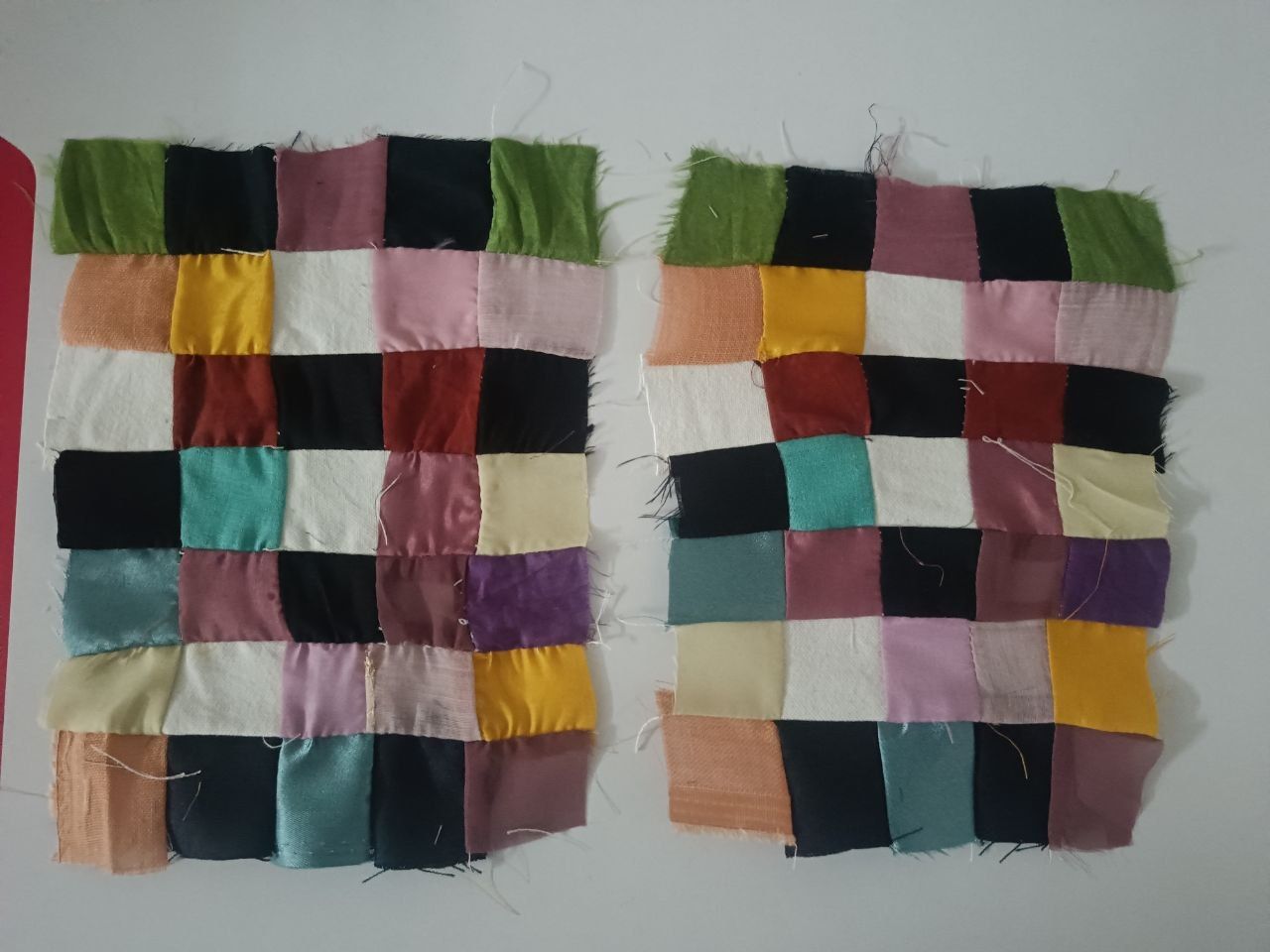
A cutting table makes offcuts all day. Many are too small for a garment and too good to throw away. A Kantha panel needs only 35 squares, each cut 6 × 6 cm. A scrap of that size is enough.
Kantha is a free studio. A maker photographs each kind of cloth, and the studio arranges the squares into one of eleven patterns. See how Kantha works.
The smallest ask of a shop is one labelled tub by the cutting table, with the good offcuts dropped in. Everything else on this page is optional.
What one club did with offcuts
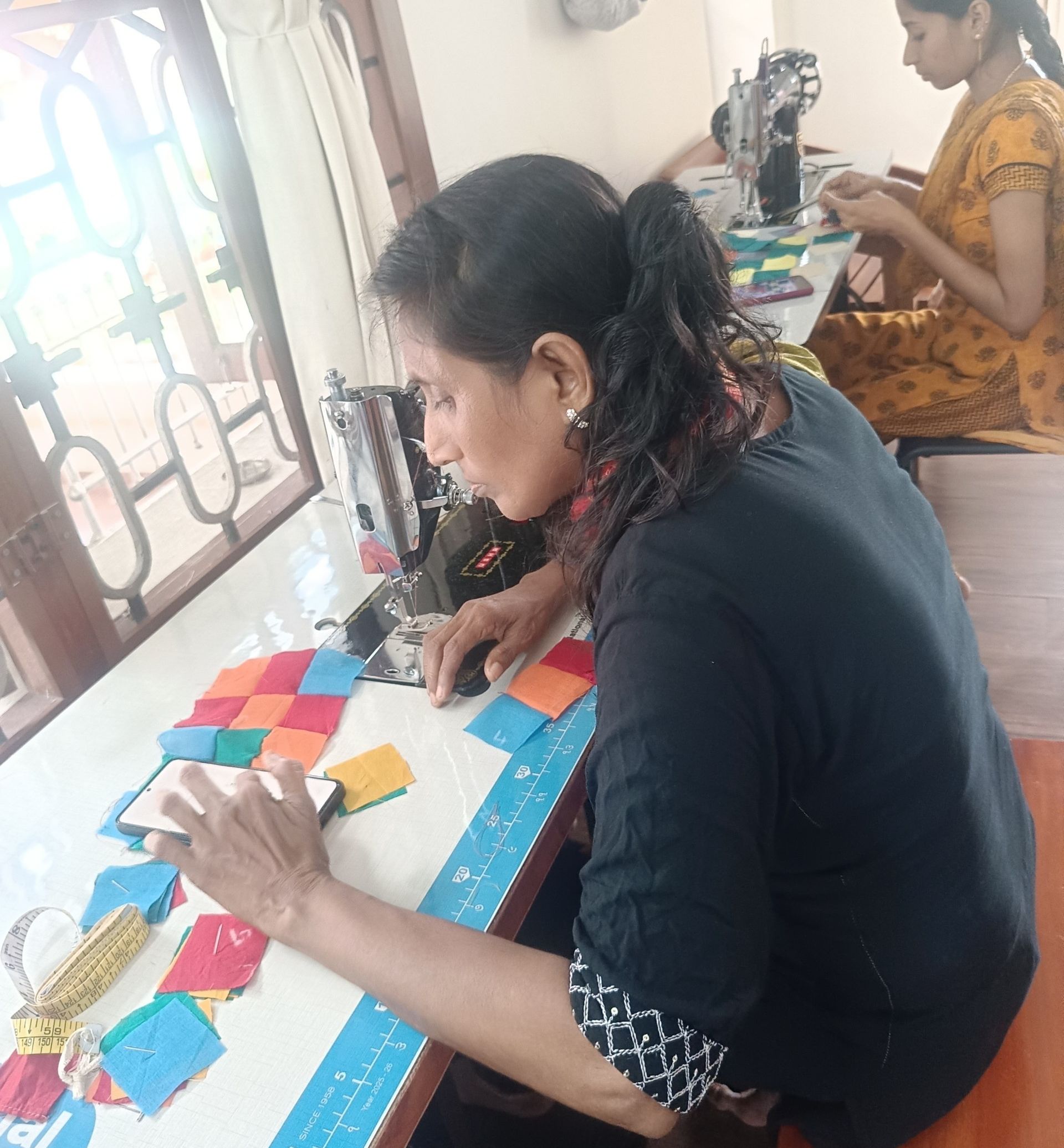
The Stitching Club at aikyam space collects offcuts from local tailor shops and boutiques. It is in Fort Kochi, Kerala, India.
A community member collected fabric pieces once headed for landfill, and the club sorted them (aikyam space, 11 April 2026 (opens in a new tab)). The case study tells the story.
The club also learned that not every offcut is usable. Many cut pieces were not suitable for making good-quality products. Members visited more boutiques to look for better cloth (aikyam space, 8 July 2026 (opens in a new tab)).
We do not know how much cloth a shop throws away, and we could not find a study of it. The club’s experience is one example.
Sorting offcuts so makers can use them
A little sorting at the shop saves makers a lot of time.
- Keep cotton and linen. They suit Kantha best. Set aside stretchy knit, sheer cloth and thick cloth.
- Check the strength. Tug a corner. Cloth that tears or stretches will not hold a stitch.
- Leave out damage. Cut around seams, stains, holes and thin, worn spots.
- Keep pieces large enough. A piece must be big enough for a square of at least 6 × 6 cm.
- Sort by cloth. Group each kind of cloth together. Each kind of cloth needs one photo and a count of the squares you cut.
- Keep plain and printed cloth. A mix gives the design more to work with.
A maker then cuts, washes, irons and photographs the squares. The post on how to cut and photograph cloth squares explains each step.
Why sorted offcuts matter
Unsorted offcuts are hard to use. A bag of mixed pieces hides the good cloth, and a maker has to sift through it before cutting any square. Sorted offcuts are different. The maker can pick a tub, check the strength of the cloth and start cutting at once.
The same sorting helps the shop. Once offcuts are in labelled tubs, staff can see what the shop throws away each week. That count is a first step in deciding whether to make panels.
Three ways a shop can take part
These are options. Each shop can choose the one that suits it.
- Pass the offcuts on. Keep the sorted offcuts in a tub and let a local group or maker collect them. To find a group, read the page for community groups, or write to us at kantha@catsofkochi.com.
- Make panels in the shop. Staff or an apprentice stitch panels in quiet hours. The sheet prints on A4 only; a panel is 28 cm tall at true size, so it does not fit Letter paper. The design lives on the one phone or computer that made it. The printed sheet shares it with the rest of the staff.
- Show a finished panel. A panel on the wall shows customers what an offcut can become.
We cannot say which will suit a shop. Each needs its own planning.
Working out whether it can sell
A shop that makes panels to sell can use the same questions as an upcycling business: time, cloth, price, small batches, where to sell, quality and roles. They are on the page for upcycling businesses. One question is special to a shop. Offcuts have a cost, even when nobody counts it.
Where to start
Open the studio and try the Sample box of real cloth. Read the Help page for the steps, and Where cloth scraps go for the wider picture. We offer this as a guide only.