Case study
Case study: a stitching club in Fort Kochi
The Stitching Club at aikyam space in Fort Kochi turns tailors' offcuts into hand-stitched panels. We follow its steps from offcuts to finished panels. Any group with cloth scraps can follow the same steps.
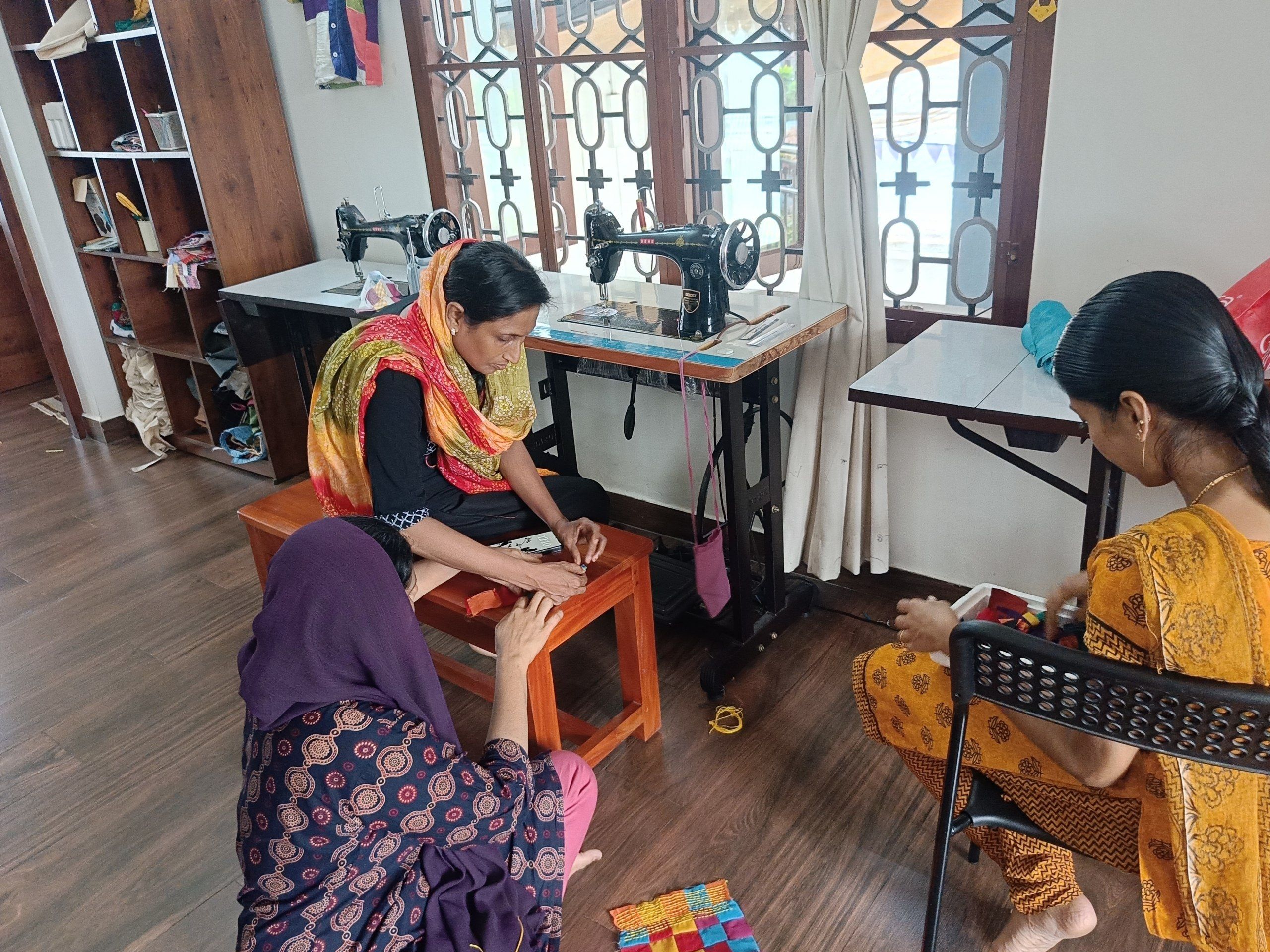
About the club
The Stitching Club at aikyam space is in Fort Kochi, Kerala, India. It began in March 2026 with members mending their own clothes with supplies from home. Tote bags came next. The club’s first Kantha session took place in September 2026.
We tell the story as one example. Any group with scraps of cloth can follow the same steps. The dates come from the club’s own session notes, listed under Sources.
Tailors’ offcuts come in
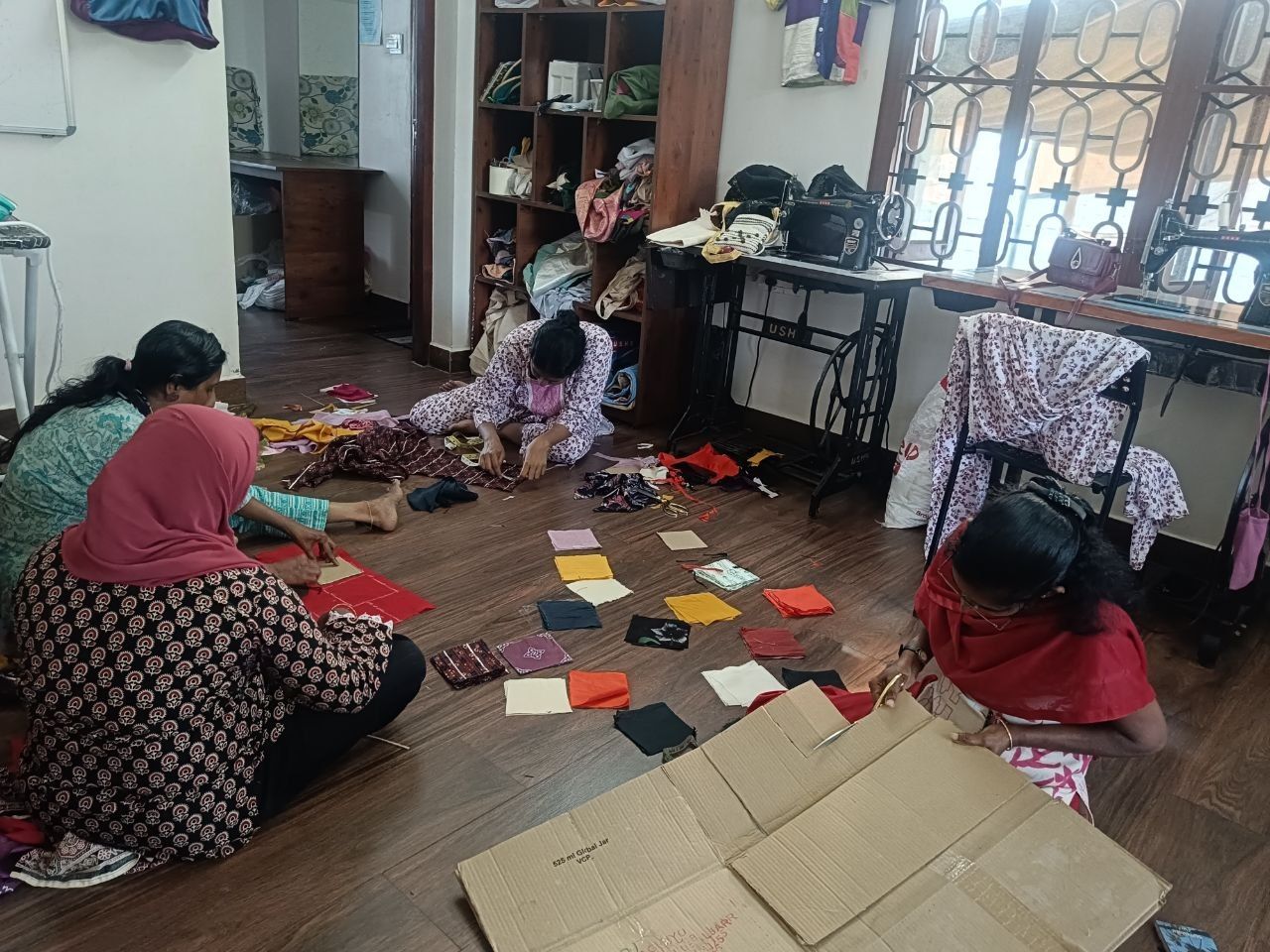
The club’s cloth is offcuts from local tailor shops and boutiques.
In April, a community member collected cloth from local tailor shops. That cloth would have gone to landfill.
Not all of it was good enough. In July the club found that many pieces were not suitable for making good-quality products. Members then visited more boutiques to look for better cloth.
Sorting and cutting
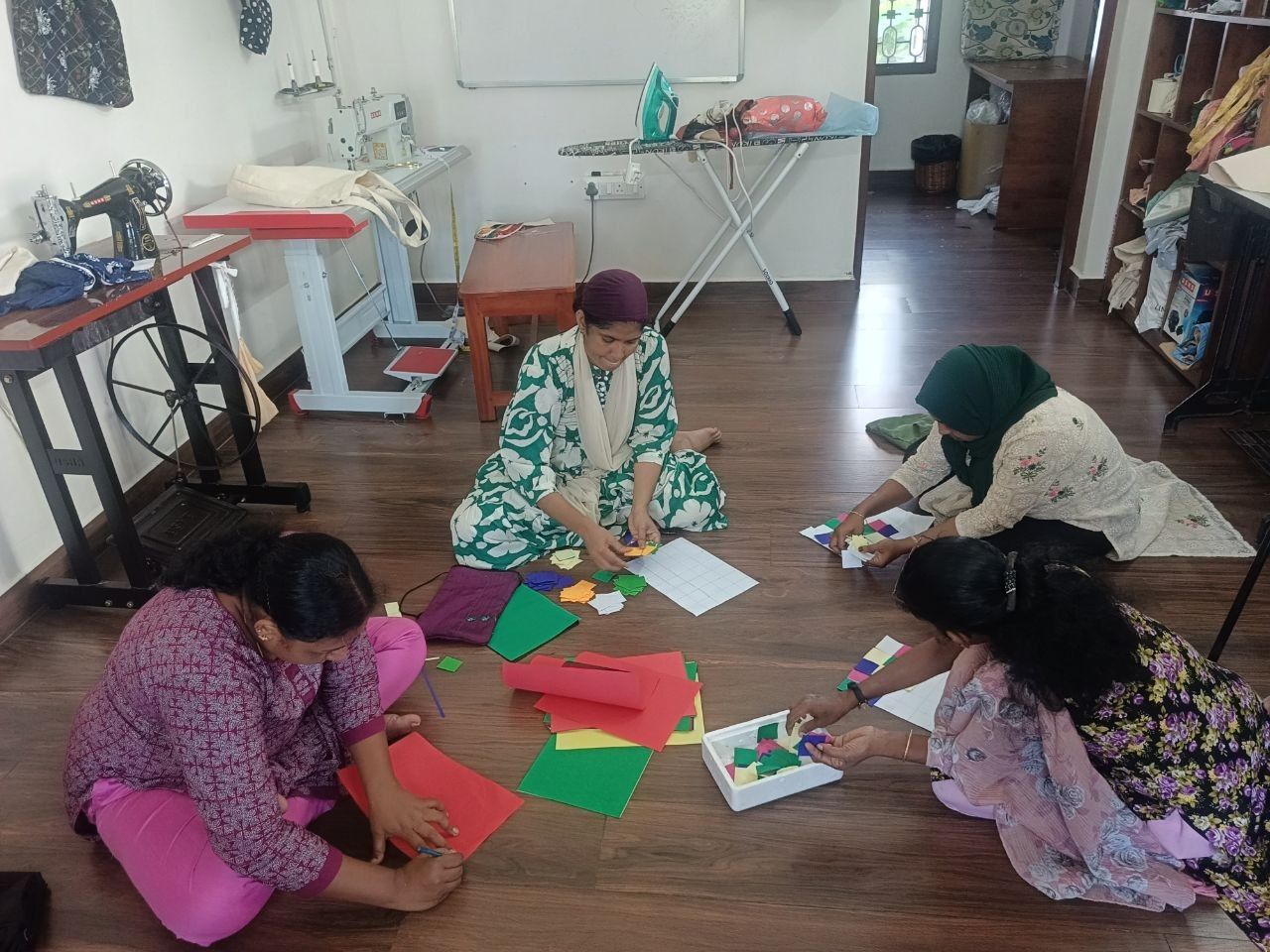
The makers sort the scraps by texture, weight and colour tone, so that each panel has a balance of colours. Straight cuts on light or stretchy cloth are hard, so the club plans to press scraps first.
Before they cut, they lay pieces out on paper. Small differences in shade change how a layout reads, and paper is the cheap place to find that out. Pairing dark and light shades helped balance a layout. They then group the pieces by colour palette.
The makers cut each square 6 × 6 cm, and 4 × 4 cm of it shows. The club tested this.
Cuts of 4 cm with no overlap frayed badly. Stiffening the cloth with paper made the needle hard to pull through. The club then moved to a 6 cm base with a 4 cm guide mark. The extra cloth overlaps, which gives the stitches room to anchor and stops the fraying. Pencil guide lines left marks, so a 4 cm wooden block now helps the makers place each square.
Designing in the studio
On 9 October 2026 the club first used the Kantha studio. In about three hours, the makers tested strip widths and colour orders on the screen. They then printed the designs on A4 paper. The screen gave a clear preview before anyone stitched.
Laying and stitching
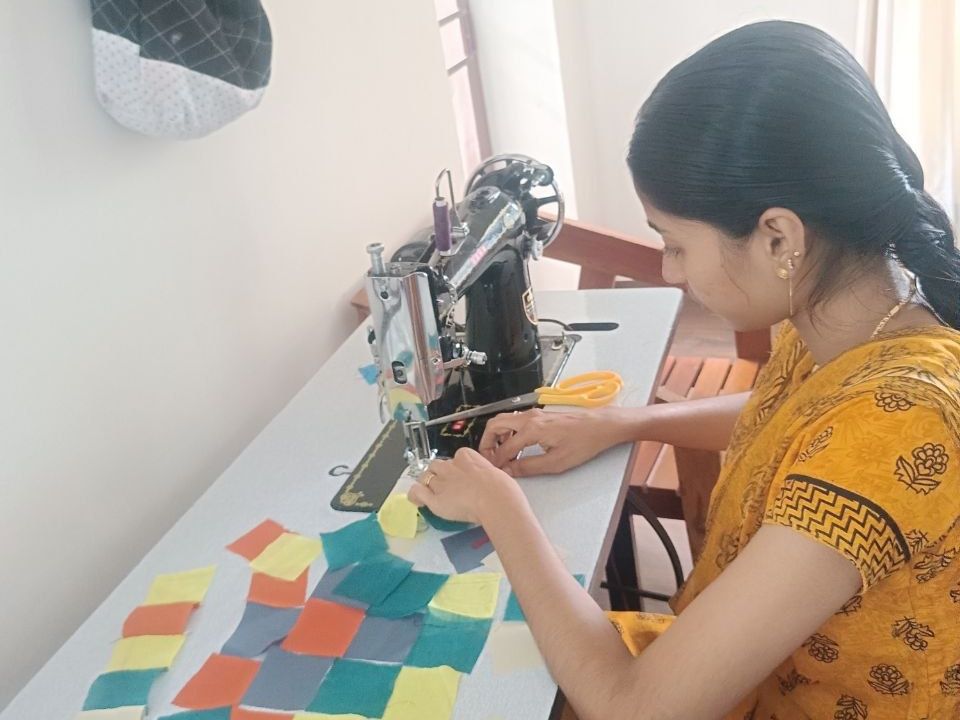
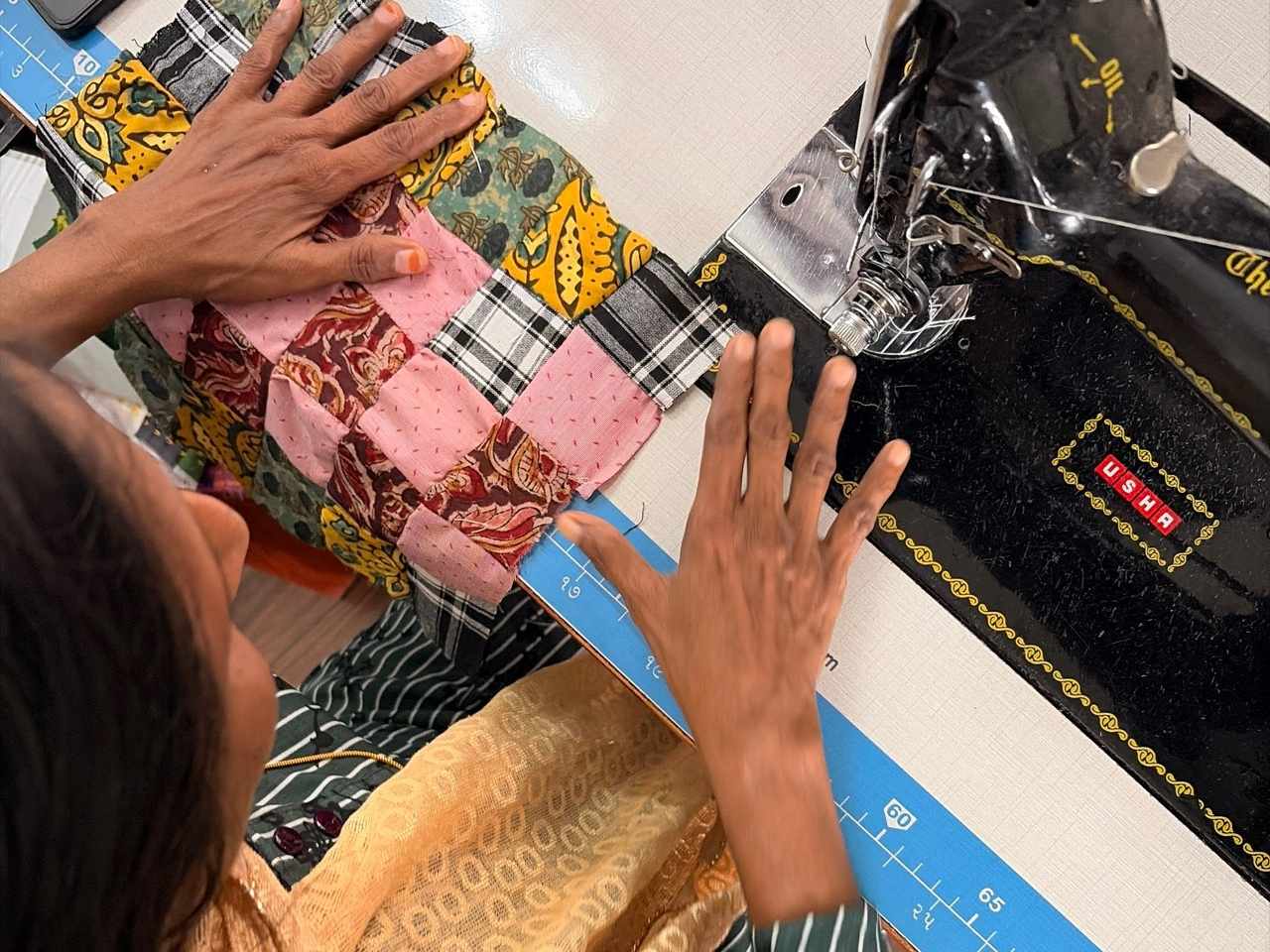
The makers lay cloth over the printed sheet before they join it. This stops colours going in the wrong place and keeps the pieces in line. Some makers join strips of cloth cut 6 cm wide, side by side. In one four-hour session, five makers joined strips into three panels and added rows of running stitch.
To set a standard, the makers each tried a different stitch spacing and thread thickness, to compare side by side for neatness, stitch density and finish. In October they found even thread tension harder at thick seams, where pulling too tight gathers the cloth. Next time they plan to pin the strips before they join them.
The studio’s own steps are on the Help page.
The bag: thread, weave, stitch
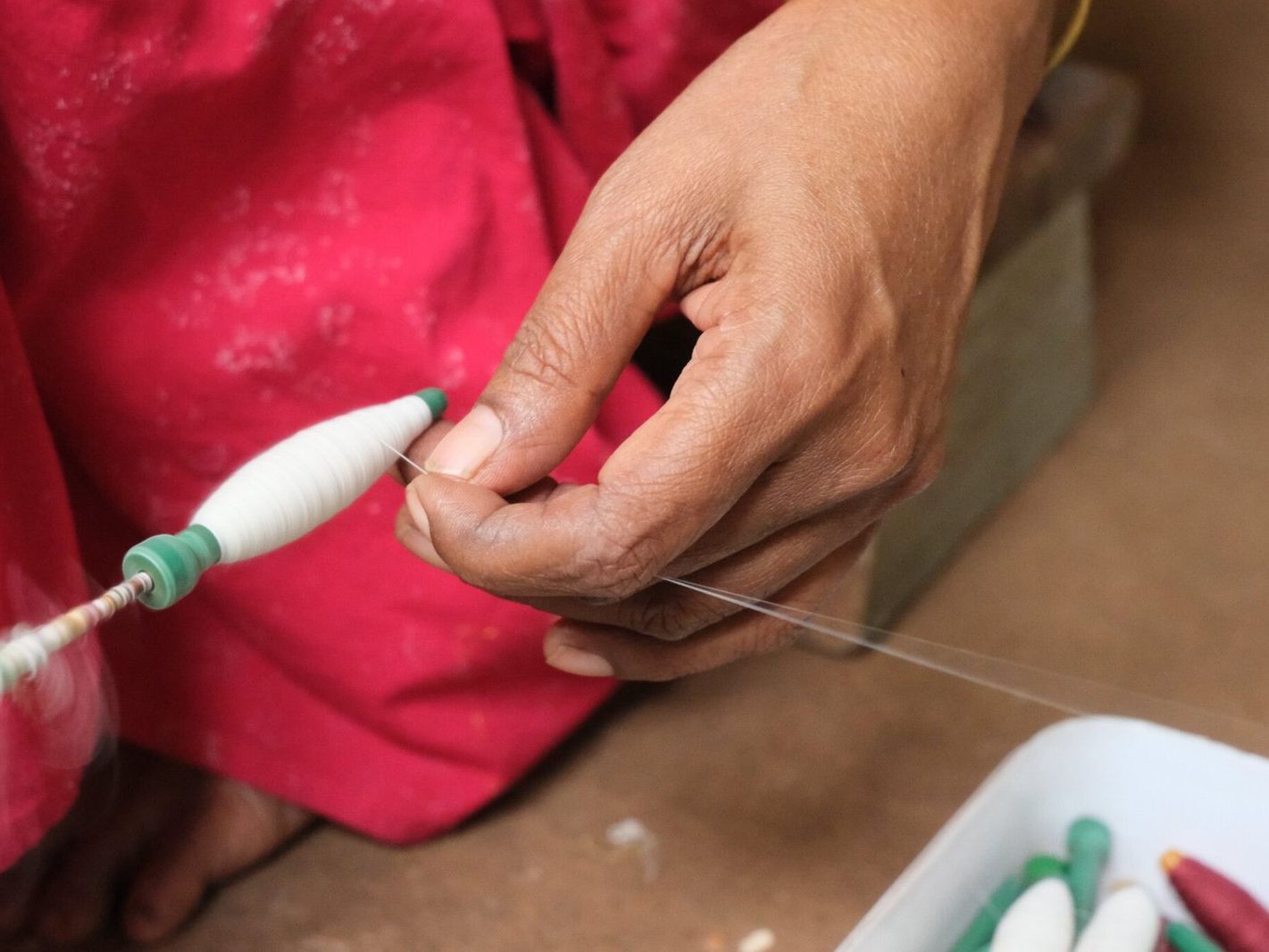
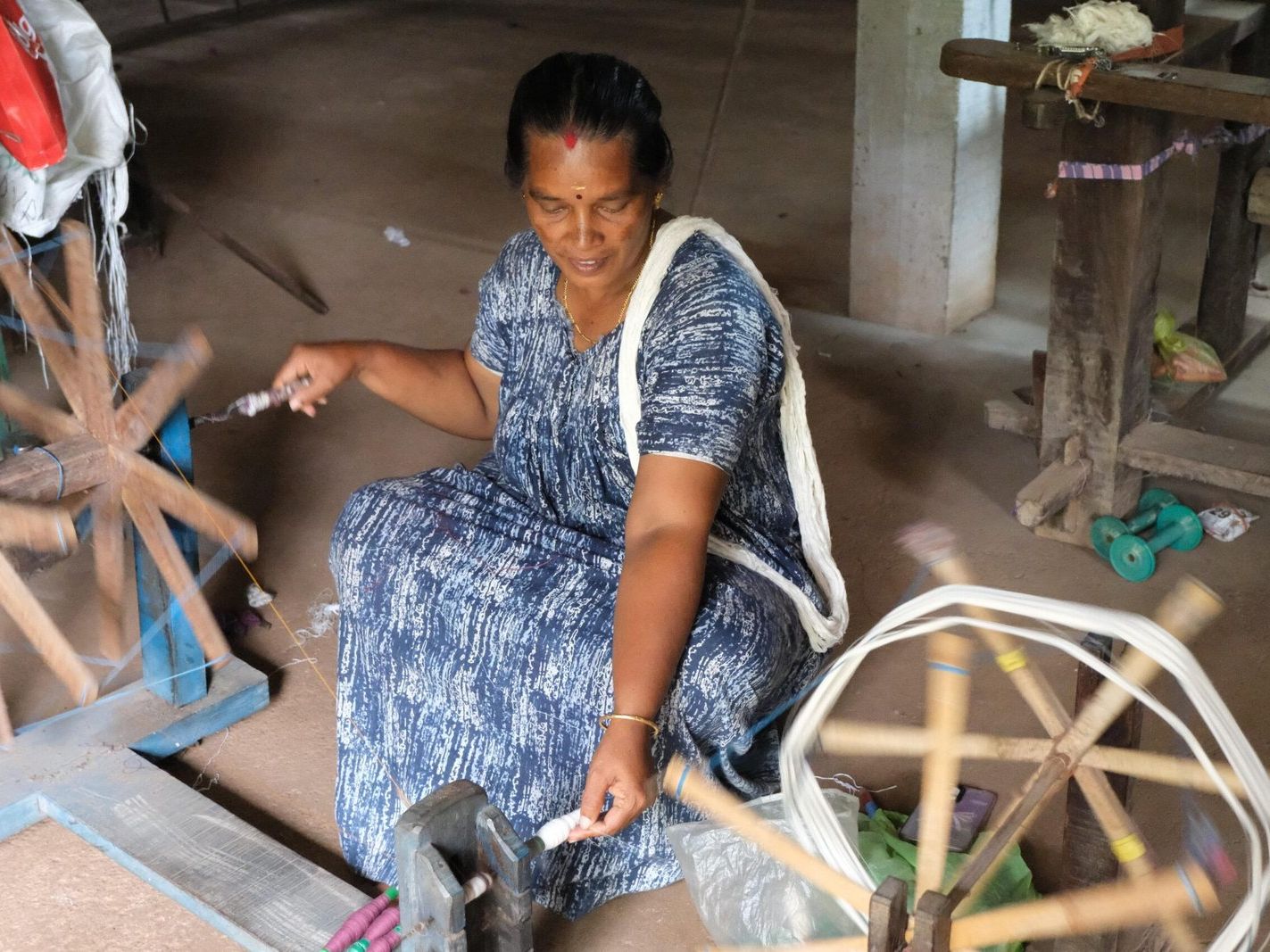
The thread comes from mills in Nagercoil and Kannur. Weavers wind every strand by hand onto a bobbin, a small spool, using a charkha.
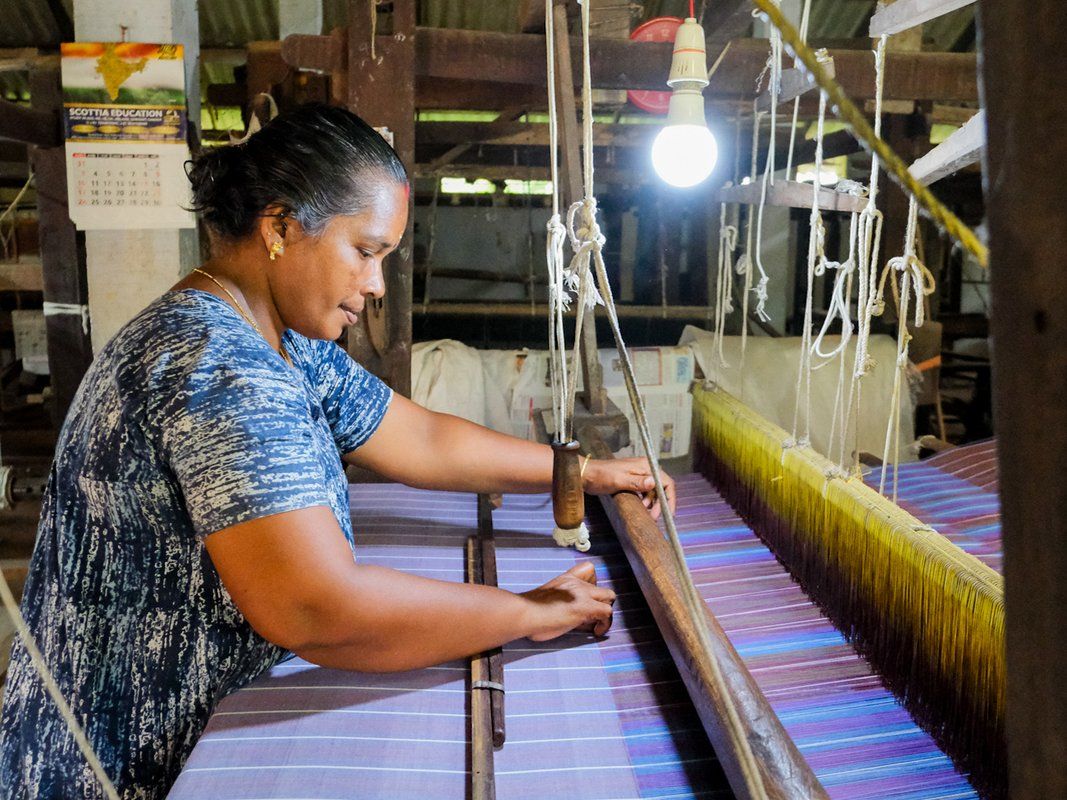
Next they starch the warp threads, the lengthwise threads. They pass the threads through heddles and reeds. These parts of the loom keep the threads in order. The weft, the crosswise thread, rides on a shuttle. It moves back and forth, worked by pedals.
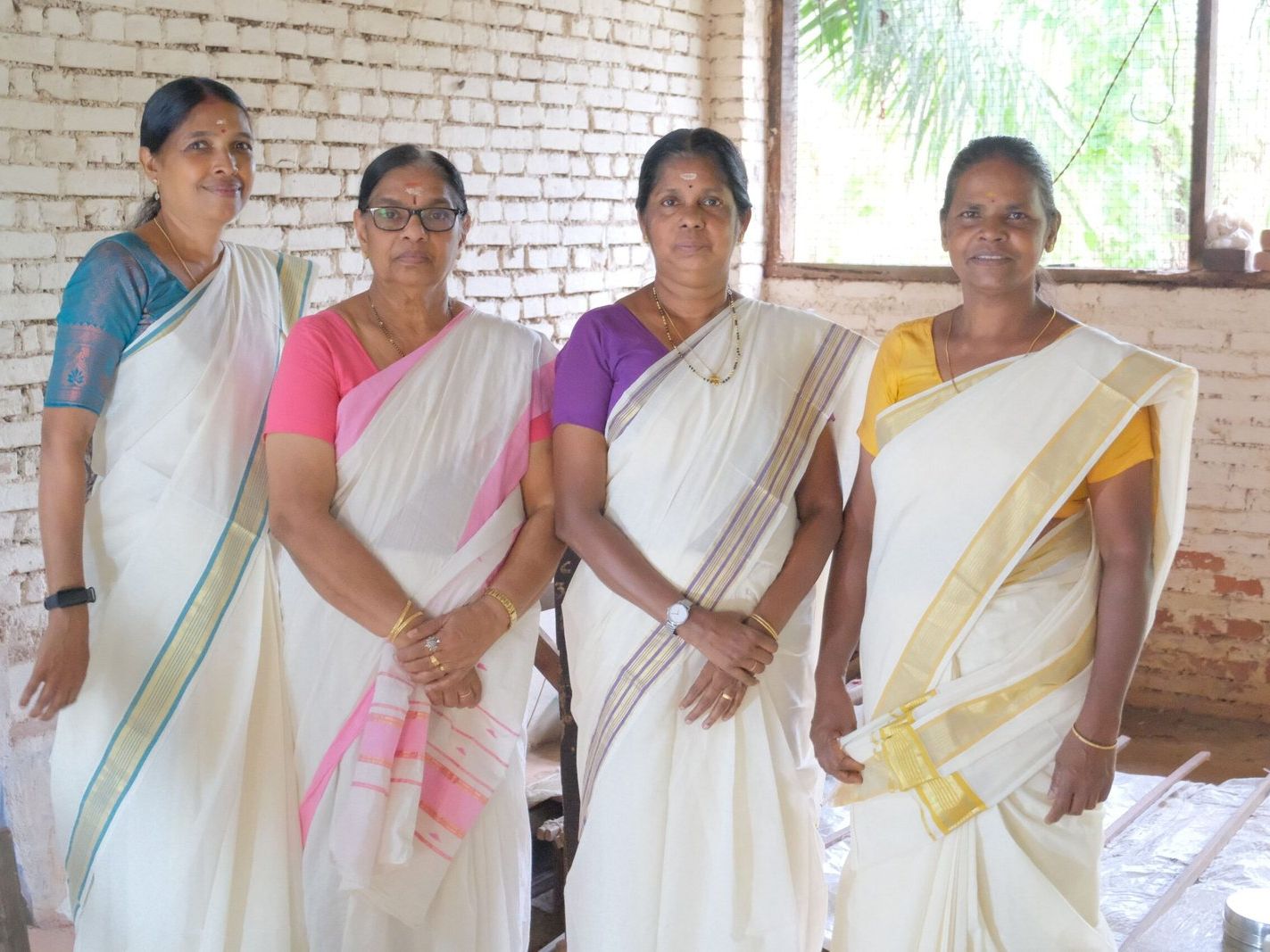
Thirteen women of the Pattariyar community weave the cloth on wooden handlooms at Chengamanad Handloom, House of Kasavu. They carry on a tradition about 70 years old. They are among the last of their community to do so. Sheeja, one of the weavers, says: “We continue because we refuse to let go of the only art we know.”
The cloth then goes to the Stitching Club at aikyam space in Fort Kochi, where Mary Gracy teaches. Kantha panels are sewn onto this same handloom cloth.
To see the cloth made into a bag, read about the Constitution Tote (opens in a new tab) in the Cats of Kochi shop.
Finished panels
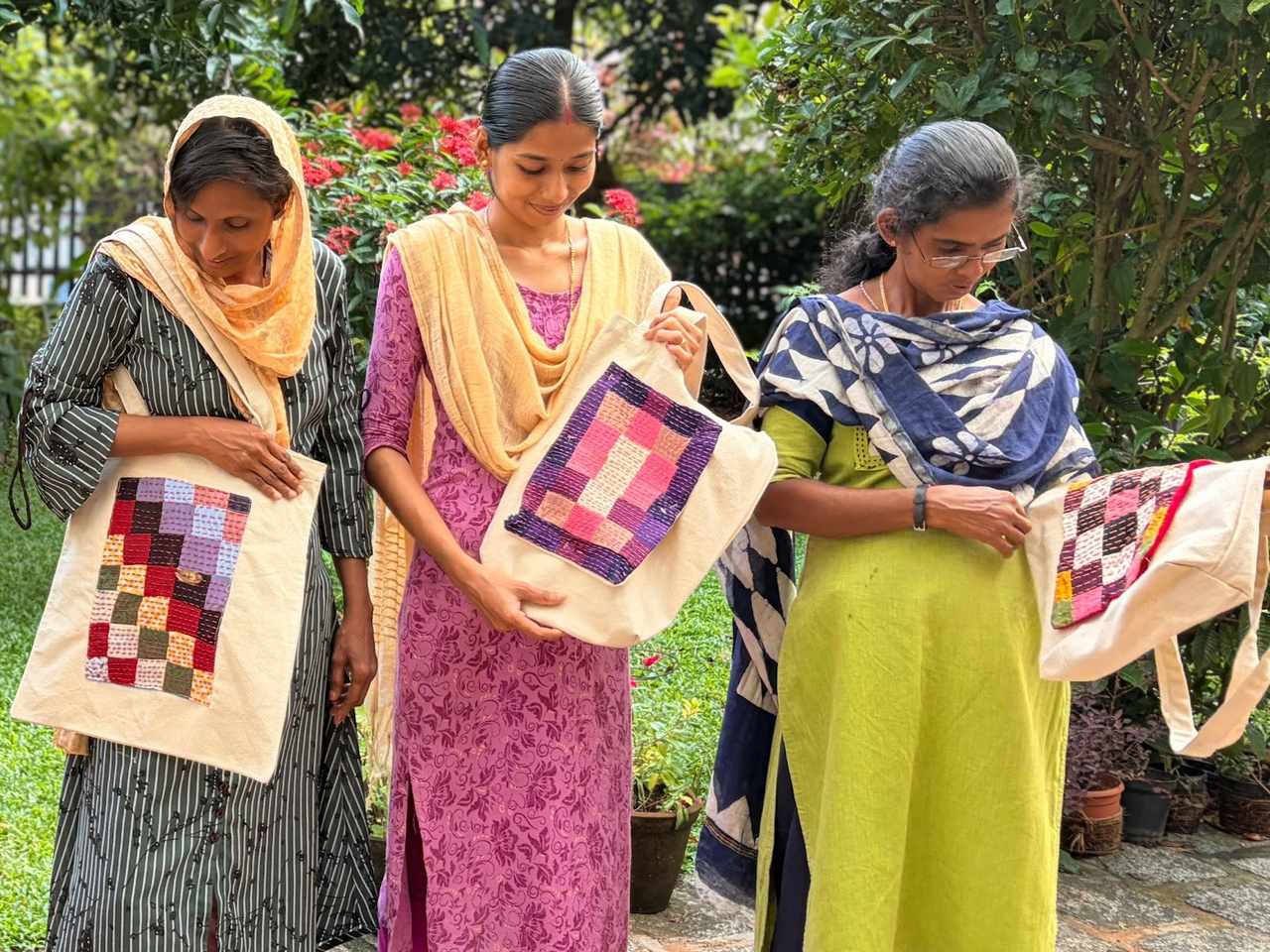
On 23 September 2026 the team finished its first full panel on a 4 cm grid. Each maker kept a portfolio file of finished trial designs. On 29 September the team put its earliest trials beside its newer work, and could see how much it had improved.
On 1 October the makers mounted finished pieces in wooden embroidery frames. They shared them with the rest of the unit. Two makers stood out for neat work, and the group agreed they would mentor the others.
Selling the panels
The Cats of Kochi shop is the only place that sells the club’s panels. The club makes nothing in advance, and it never makes a panel twice. When the cloth runs out, it cannot make that panel again.
Other groups
A club, a business or one maker can use the same steps. Choose the page that fits.
Sources
The club wrote up each session on the aikyam space website. These notes are the source for the dates and facts above.
- Six members mended their own clothes in the stitching lab (opens in a new tab), 27 March 2026
- Fabric bound for landfill was collected from tailor shops (opens in a new tab), 11 April 2026
- Many of the fabric scraps turned out unusable (opens in a new tab), 8 July 2026
- Members went to boutiques hunting better fabric scraps (opens in a new tab), 9 July 2026
- Techniques for balancing puzzle pieces (opens in a new tab), 8 September 2026
- Transitioning to a 6 cm fabric base (opens in a new tab), 16 September 2026
- Adjustments to fabric seam margins (opens in a new tab), 18 September 2026
- Achieving 4 cm grid precision in Kantha panels (opens in a new tab), 23 September 2026
- Reflecting on progress: organization sparks pride and precision in Kantha craft (opens in a new tab), 29 September 2026
- Method testing in Kantha stitching: finding the perfect thread and spacing (opens in a new tab), 30 September 2026
- Praise, precision and peer-led learning in Kantha craft (opens in a new tab), 1 October 2026
- Systematic preparation and precision cutting of fabric strips (opens in a new tab), 9 October 2026
- Digital visual planning and Kantha app pattern printing (opens in a new tab), 9 October 2026
- Stitching the pieces (opens in a new tab), 12 October 2026
- Cats of Kochi: Constitution Tote, “How it’s made” (opens in a new tab)
- Cats of Kochi: Handloom Kasavu saree, “Process of weaving” (opens in a new tab)
Start with cloth already at home
A Sample box of real cloth is ready for anyone who wants to try it first.
Start designingFree. No sign-in. No AI. Photos stay on the device.